Why Simply Stopping Payments Costs this man Thousands
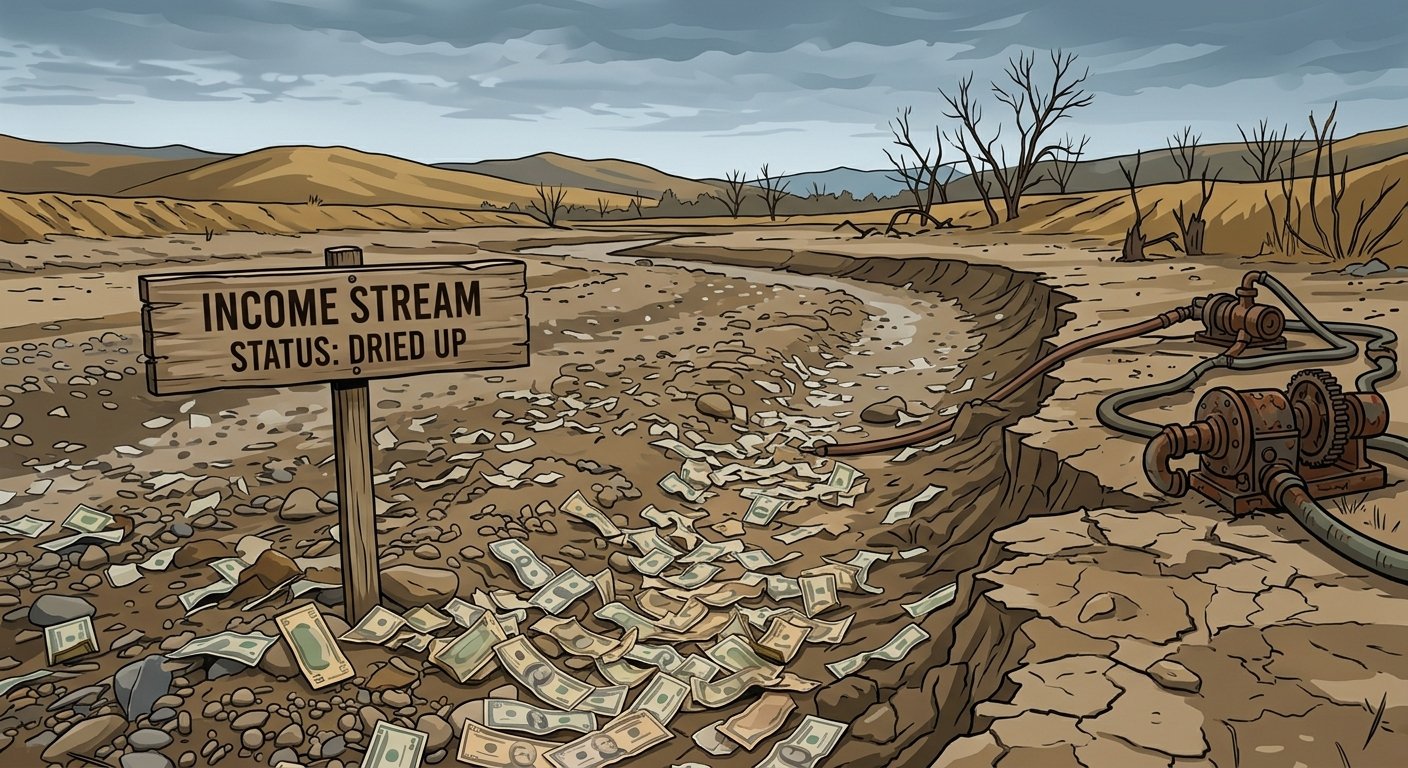
Is an income stream ending due to disability a guarantee to change support?
Your income drops. You don’t have the money to pay the ordered support. So you pay what you can, and you tell yourself you will sort it out later. Everyone will understand. The numbers speak for themselves.
A new BC Supreme Court decision, Collette v. Leger, 2026 BCSC 1632, shows exactly what that choice costs.
The husband in this case had a genuine and permanent disability. He still lost most of his arguments about the past. He still had to make up for the support he didn’t pay in the past.
The facts in brief
The parties lived together about 24 years and separated in 2014. In April 2023 a judge ordered him to pay spousal support of $3,964 per month, based on income of $159,814.
His health then collapsed. He was hospitalized. In June 2023 WorkSafeBC found his depression had stabilized as a permanent condition. In April 2025 it found he was competitively unemployable.
He filed his application in August 2025.
He asked the court to backdate the change to April 2023, when the order was made, or to July 2023, when his condition became permanent. He also asked the court to wipe out the arrears, the interest and the fees.
He got a variation, but only back to January 1, 2025.
The rule most payors have never heard of
When a payor asks to lower support for a past period, the court starts with the date of effective notice.
Effective notice is not a feeling. It is a clear message to the other spouse that you say your circumstances have changed, along with enough information for them to check it. The framework comes from Colucci v. Colucci, a 2021 decision of the Supreme Court of Canada, and BC courts now apply it to spousal support too.
If there was no effective notice, the starting date is formal notice, meaning the date the application was filed.
Justice Sukstorf found there was no effective notice here before August 2025.
Read what she said carefully, because this is the sentence that costs people money. His disagreement with the order, and his failure to pay the ordered amount, did not amount to a request to vary. Neither did the growing pile of medical and WorkSafeBC evidence. He never gave her the information she needed to assess his position.
Not paying is not notice. It is just not paying.
Why he did not get 2023 either
He had a second argument. He said the income used in the earlier orders was inflated, because employer payments, retroactive amounts and overlapping disability benefits were counted as though each was separate money in his hands.
There was real substance to this. Sun Life calculated an overpayment of $96,704.22 in July 2024. His employer paid him $115,126.45 in August 2024 for wage loss benefits covering 2021 to 2023, which he used to repay Sun Life. The tax forms explaining which periods those payments belonged to were not issued until November 2024.
The judge accepted that these records clarified his income history. She still refused to reopen 2023 and 2024.
Her reason is one every litigant should tattoo somewhere. A variation application is not an appeal. If you think the judge got your income wrong, the remedy is an appeal, not a fresh application two years later.
The date she chose, and why
The presumptive date was August 2025, when he filed his application. The judge did not use this. She went back further, to January 1, 2025.
She explained that by the end of 2024 the confusion had cleared. The overpayment had been calculated, the retroactive payment had been made, and the tax forms had arrived. January 1, 2025 was the first date his real income could be measured on a stable annual basis.
She weighed his permanent disability, his mental health limits, the messy records, and the fact that he applied about three months after the unemployability finding. Against that she weighed the missing notice and the wife's reliance on the order.
So he did better than the default rule. He just did far worse than he asked.
The arrears survived
Cutting support for the past and cancelling arrears are two different things. Many people assume they travel together. They do not.
First the account gets recalculated using the new amounts. Only what is left after that is up for cancellation.
Under section 174 of the Family Law Act, a court can cancel arrears only if it would be grossly unfair not to. That bar is high. You normally have to prove you cannot pay now and cannot pay in the future.
Mr. Leger could not clear that bar.
He had made a payment of more than $71,000 toward arrears in May 2024 by borrowing against his home. The judge credited that as some compliance. She also noted it happened when enforcement was blocking his mortgage renewal, and that most other payments came through enforcement rather than by choice.
He pointed to a line of credit sitting at $201,052.91. But the evidence traced only about $77,000 of it to the support payment. Debts you chose to prioritize do not create gross unfairness.
Most of all, he could not show he was unable to pay. He receives $79,463 a year in benefits. His ongoing obligation had just been cut by more than half. And he holds equity in his home estimated at about $536,761.
He compared himself to a payor in an earlier case who had lived at a subsistence level for 20 years with no assets and no pension. The judge drew the line clearly. That man had nothing. This man has a stable income stream and substantial equity.
The arrears stand. Enforcement continues.
Four things to take from this
Give effective notice, in writing, early. Say your circumstances have changed, say why, and attach the proof. That single letter can be worth many months of support.
File promptly. Waiting is expensive, and the court asks why you waited.
Keep paying something. The judge specifically noted that he did not make regular voluntary payments reflecting what he could reasonably afford while the case was pending. That silence hurt him.
Equity in your home is a resource. It is not liquid, and the court knows that. It still counts when you say you cannot pay.
If your income has dropped, the most valuable thing you can do this month is send proper notice and start the application. Every month of delay is usually a month you keep owing.
If your support is hinging on retroactive decreases in income, you need to establish effective and formal notice. Call Recovery Family Law in Surrey at 604-584-0007.